
June 2026 | Protective Security, Preparedness & Resilience
Security preparedness is increasingly becoming a boardroom & operational priority for organisations across the UK.
The UK's national terrorism threat level was raised from SUBSTANTIAL to SEVERE on 30 April 2026, meaning an attack is considered highly likely.
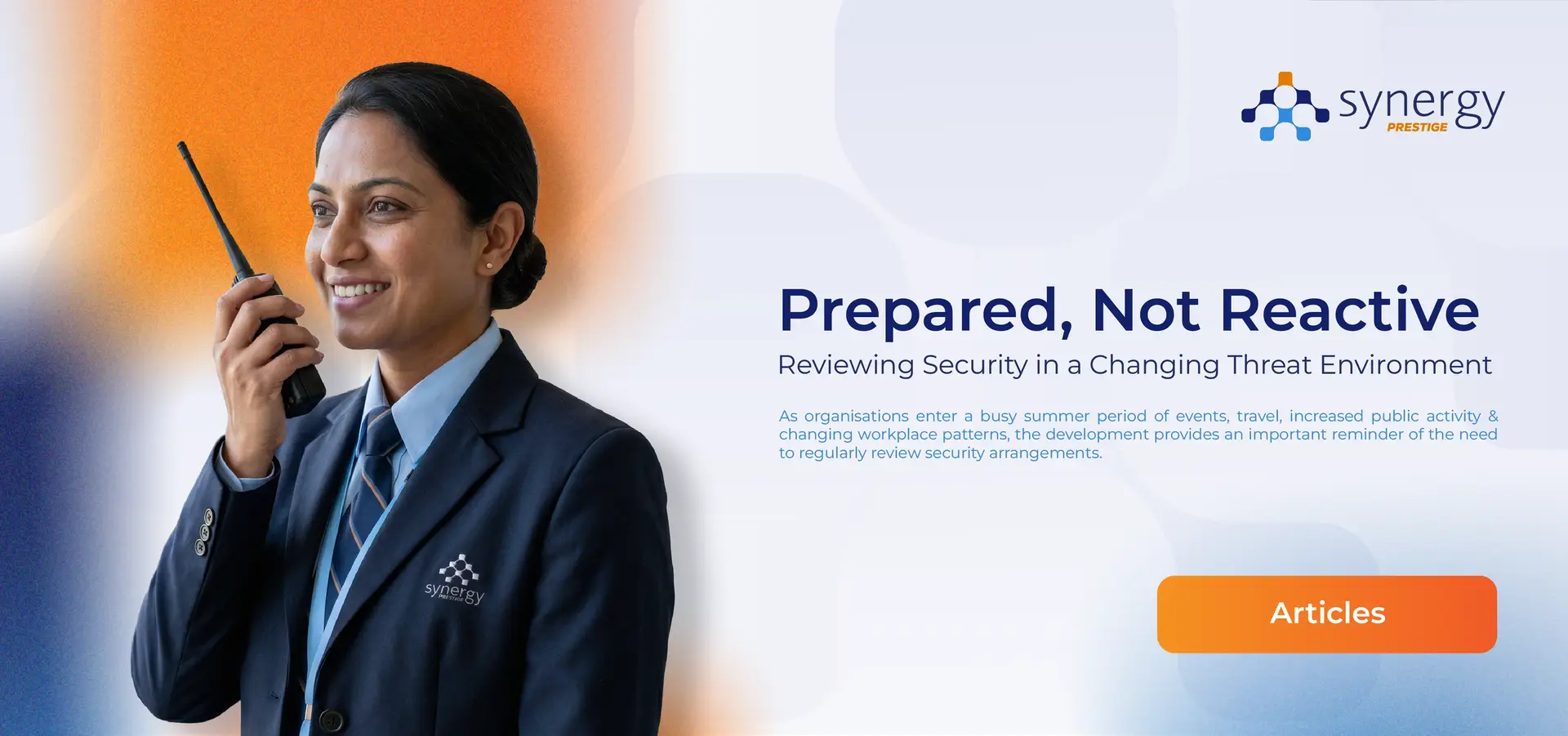
As organisations enter a busy summer period of events, travel, increased public activity & changing workplace patterns, the development provides an important reminder of the need to regularly review security arrangements.
The objective should not be to create alarm.
It should be to ensure organisations are informed, prepared & capable of responding effectively if something happens.
Preparedness Starts Before an Incident
One of the most important principles of effective security is straightforward:
The time to decide how you will respond to an incident is not when the incident is already happening.
Security plans need to be developed in advance.
Responsibilities need to be understood.
Communication arrangements need to be established.
People need to know what is expected of them.
And procedures need to be tested.
In June, ProtectUK introduced a new Roadmap to improved security & preparedness, designed to help businesses, venues & organisations take a structured approach to understanding vulnerabilities, considering risk & implementing proportionate security measures.
Importantly, the guidance applies more broadly than organisations that will ultimately fall within the scope of Martyn's Law.
Good security preparedness is relevant to every organisation.
Start by Understanding Your Environment
Every premises is different.
An office building faces different challenges from a retail environment.
A manufacturing facility operates differently from a hotel.
A data centre has different critical assets from a public venue.
Effective security therefore starts with understanding:
What are we protecting?
Who are we protecting?
What could potentially happen?
Where are we vulnerable?
What controls are already in place?
What would we do if those controls failed?
A security risk assessment provides a structured way of considering these questions & determining whether existing arrangements remain proportionate to the environment.
Look Beyond the Front Door
Protective security is not simply about preventing somebody from entering a building.
Organisations should consider the entire environment.
This can include:
Perimeter Security – boundaries, gates, external areas & potential approaches.
Access Control – employees, contractors, visitors & deliveries.
CCTV & Surveillance – coverage, monitoring & the ability to respond when something is identified.
Vehicle Access – car parks, loading areas & vehicle approaches.
Critical Areas – plant rooms, communications infrastructure, server rooms & other sensitive locations.
Security Personnel – deployment, responsibilities, training & escalation arrangements.
Out-of-Hours Security – mobile patrols, keyholding, alarm response & property checks.
The objective is to create multiple complementary layers of security rather than depending upon a single control.
Would Your People Know What to Do?
Perhaps the most important question organisations can ask is:
If something happened today, would our people know what to do?
Most workplaces have established fire evacuation procedures.
Security incidents can be different.
Depending upon the nature and location of a threat, the safest response may involve evacuation, invacuation or lockdown.
Employees need to understand how instructions would be communicated and what actions may be expected of them.
Security Officers & managers need additional clarity around responsibilities, escalation & communication with emergency services.
Visitors and contractors also need to be considered.
A procedure sitting in a folder is not enough.
People need to understand it.
Awareness Makes a Difference
Counter Terrorism Policing's summer campaign is once again encouraging members of the public to remain alert, trust their instincts & report activity that doesn't feel right.
For organisations, creating an appropriate security culture can provide another valuable layer of protection.
Employees know their normal working environment.
They often recognise when something is unusual.
An unfamiliar person in a restricted area.
A door that is normally secured being repeatedly left open.
Unusual interest in security arrangements.
Suspicious activity around a building.
A vehicle behaving unexpectedly.
The objective isn't to make employees suspicious of everyone around them.
It is to create confidence around recognising & reporting something that genuinely doesn't look right.
Technology Supports Preparedness
Modern security technology can provide significantly greater visibility during both normal operations & incidents.
Access control can help manage and review movement through critical areas.
CCTV can provide situational awareness.
Digital patrol systems can verify that important locations have been inspected.
Mobile technology allows Security Officers to communicate information quickly.
Incident reporting platforms can capture photographs, statements & other relevant information as events develop.
Operational management can then use that information to make better decisions.
But technology works best when combined with trained people & clear procedures.
People + Technology + Procedures = Better Preparedness.
Martyn's Law - Preparing for What's Ahead
The Terrorism (Protection of Premises) Act 2025 commonly known as Martyn's Law, represents another important development in the UK's approach to protective security.
The legislation is expected to come into force from spring 2027, with the Security Industry Authority preparing to take on its new regulatory responsibilities.
Organisations potentially affected by the legislation should therefore be using the intervening period constructively.
But preparedness should not simply be viewed as a compliance exercise.
Understanding risk, training people & establishing effective procedures are sensible security practices regardless of whether a particular organisation ultimately falls within the legislation.
Test the Plan
One of the most valuable things an organisation can do is test its assumptions.
A tabletop exercise can quickly identify weaknesses that may not be obvious from reading a written procedure.
For example:
Who takes control?
Who contacts the emergency services?
How do you communicate with employees?
What happens if the normal decision-maker isn't available?
Can doors be remotely secured?
Where would people invacuate?
How would you account for employees & visitors?
What happens if normal communications are unavailable?
Exercises turn written plans into practical understanding.
They also provide an opportunity to identify improvements before those arrangements are needed for real.
Building a Security-Ready Organisation
At Synergy Prestige, we believe effective security goes beyond providing a physical presence.
It requires an understanding of people, premises, threats, vulnerabilities, technology & operational procedures.
Our role is to work with customers to protect their people & operations while ensuring frontline security services form part of their wider approach to preparedness & organisational resilience.
The current security environment provides an appropriate opportunity for organisations to review their arrangements.
Not because an incident is inevitable.
But because preparedness is always preferable to improvisation.
Assess. Prepare. Protect. Respond.
Because when something happens, the organisations best positioned to respond are those that have already considered what they will do.
Synergy Prestige
Prepared People. Stronger Security. Resilient Organisations.